
Electrical work is part of everyday life for electricians, but even a familiar task can become dangerous when something goes wrong. A damaged cable, exposed conductor, or unexpected electrical fault can cause serious injuries within seconds.
Australian workplace safety statistics highlight the risks: over a 10-year period, 44 electricians died from traumatic work-related injuries, with 23 of those deaths (52%) attributed to electrocution. Electrical injuries also reportedly result in approximately 550 hospitalisations among electricians in Australia each year.
An electric shock doesn’t always leave visible injuries. It can affect the heart, interfere with breathing, cause severe burns or lead to a fall. In some cases, the injured person may remain in contact with live electrical equipment, making the situation dangerous for anyone attempting to help.
This is why Low Voltage Rescue (LVR) training is an important part of workplace safety for electricians and electrical businesses.
Understanding electrical hazards, preparing rescue equipment and knowing how to respond in an emergency can help protect both the injured worker and their colleagues.
In this guide, we’ll explain what Low Voltage Rescue involves, the risks associated with electrical work, the importance of safety observers and the steps involved in responding to a low-voltage electrical emergency.
What Is Low Voltage Rescue (LVR)?
Low Voltage Rescue (LVR) involves safely assisting someone who has come into contact with energised low-voltage electrical equipment.
The person may have suffered an electric shock, lost consciousness or sustained other injuries requiring immediate first aid or resuscitation.
In Australia, low voltage generally refers to electrical supplies above extra-low voltage and up to:
- 1,000 volts AC (alternating current)
- 1,500 volts DC (direct current)
Although the term low voltage might sound less dangerous, electricity within this range can cause serious injury or death.
The nationally recognised unit UETDRMP018 – Perform Rescue from a Live Low Voltage Panel develops the skills and knowledge needed to respond to emergencies involving live low-voltage electrical apparatus.
It covers workplace rescue requirements, the inspection and use of rescue equipment, and safe emergency response procedures.
Why Is Low Voltage Electricity Dangerous?
Electricity presents a particular challenge because its presence is not always obvious. A conductor or piece of equipment can be energised without giving any visible warning.
When electrical current passes through the human body, the effects depend on several factors, including the current’s strength, the duration of exposure and the path it takes.
How electric current affects the body
Electrical exposure can produce different physiological effects:
- Tingling and discomfort: Small currents may be noticeable through the skin.
- Involuntary muscle contractions: Stronger currents can cause muscles to tighten, making it difficult to release an energised object.
- Breathing difficulties: Electrical current can interfere with normal respiratory function.
- Heart rhythm disturbances: Dangerous arrhythmias, including ventricular fibrillation, can occur.
- Severe burns and cardiac arrest: Higher currents or prolonged exposure can cause extensive injuries and may be fatal.
Electrical accidents can also result in secondary injuries. A worker might fall from a ladder, strike nearby equipment or suffer cuts and fractures after receiving a shock.
The seriousness of an electrical injury cannot always be judged by its appearance. Anyone who has received an electric shock should receive medical assessment, even if they initially feel well.
Common Electrical Hazards in the Workplace
Electrical risks can arise in residential, commercial and industrial environments, particularly during installation, maintenance, testing and repair work.
Some of the most important hazards to consider include:
Live electrical equipment
Switchboards, exposed conductors and electrical installations may contain energised components capable of causing serious injury.
Damaged wiring and equipment
Faulty cables, damaged insulation and defective electrical tools can create unexpected contact with live electrical parts.
Water and moisture
Wet surfaces, water leaks and damp working conditions can increase the risk of electrical shock.
Electrical fires and arc flashes
Electrical faults can generate extreme heat, fire, smoke and burns. These incidents may also expose nearby workers to additional hazards.
Solar panels and DC electricity
Solar photovoltaic systems require particular care because panels can continue generating DC electricity while exposed to light.
Switching off the main electrical supply or inverter does not necessarily remove voltage from the solar panels or associated DC circuits.
Electricians working with solar installations must follow the correct isolation procedures and remain aware of potentially energised components.
Electrical Hazard Identification and Risk Assessment
Preventing electrical accidents begins with identifying hazards before work starts.
A hazard is something that has the potential to cause harm. Risk considers both the likelihood of that harm occurring and the possible consequences.
For electrical work, risk assessments should take into account the working environment, the equipment involved and the people carrying out the task.
What should an electrical risk assessment consider?
An assessment should examine:
- The source and characteristics of the electrical supply.
- The number of workers involved.
- The location and accessibility of the work area.
- The type of electrical installation, machinery or equipment.
- The nature of the work being performed.
- Existing workplace practices and procedures.
- Workers’ qualifications, experience and competence.
- Potentially abnormal or unexpected conditions.
Hazards can be identified through workplace inspections, consultation with employees, equipment manufacturers’ instructions, previous incident reports and Safe Work Method Statements (SWMS).
Once the hazards have been identified, the next step is to evaluate the risks and introduce appropriate controls.
Understanding the hierarchy of risk controls
Electrical safety measures should follow the hierarchy of controls, prioritising the most effective ways of reducing exposure to hazards.
- Elimination: Remove the hazard entirely wherever possible.
- Substitution: Replace hazardous equipment or processes with safer alternatives.
- Isolation: Separate people from the hazard, including through appropriate electrical isolation.
- Engineering controls: Use physical safeguards, protective barriers or other engineered solutions.
- Administrative controls: Implement safe work procedures, supervision and appropriate work arrangements.
- Personal Protective Equipment (PPE): Use suitable protective equipment to reduce exposure to remaining risks.
PPE is important, but it should not be relied upon as the only protection against electrical hazards.
Risk controls must be reviewed and maintained to ensure they remain effective throughout the work.
Safe Isolation of Electrical Supplies
Proper electrical isolation is a fundamental part of preventing electric shock.
Before maintenance or repair work begins, the relevant electrical supply should be safely disconnected wherever possible, following the appropriate workplace procedures.
Depending on the installation, isolation may involve switches, circuit breakers or other approved isolation devices.
However, operating a switch does not automatically confirm that equipment is electrically safe.
Workers must follow the required procedures for identifying the correct supply, isolating it, preventing unintended re-energisation and verifying that the equipment is de-energised.
Stored energy and alternative power sources must also be considered.
Lockout and tagout procedures
Lockout and tagout arrangements help prevent electrical equipment or machinery from being accidentally switched on while work is being performed.
A typical energy-control process includes:
- Shutting down the equipment through the appropriate procedure.
- Disconnecting or isolating the relevant energy source.
- Controlling stored or residual energy.
- Applying suitable locks and warning tags to prevent unauthorised operation.
The effectiveness of isolation must also be verified before work proceeds.
These procedures are especially important in workplaces where multiple people may have access to the same equipment or electrical controls.
Safe Approach Distances Around Electrical Equipment
Maintaining a safe distance from energised electrical equipment is another important safety precaution.
A Safe Approach Distance (SAD) establishes the minimum clearance required for a particular electrical hazard and working situation.
These distances are not necessarily identical across all workplaces.
They can depend on:
- The voltage and type of electrical equipment.
- State and territory safety requirements.
- Industry-specific procedures.
- The task being performed.
- The worker’s qualifications and authorisation.
For example, requirements for electrical utility workers may differ from those applying to other workers.
Electrical workers should always follow the relevant legislation, workplace procedures and authorised approach distances for their particular task.
Equipment should be treated as energised until its de-energised condition has been properly established.
The Role of a Safety Observer in Electrical Work
A safety observer is an appropriately trained and competent person appointed to monitor certain electrical work activities.
Their primary responsibility is to remain alert to potential hazards and help protect workers carrying out the task.
Safety observers are particularly important where electrical work presents elevated risks and an immediate emergency response may be required.
Key responsibilities of a safety observer
Continuous monitoring
The observer watches the electrical work and surrounding conditions, looking for hazards or changes that could affect safety.
Understanding the work
They must be familiar with the task, associated risks and the control measures identified in the risk assessment or SWMS.
Warning workers
If unsafe conditions develop, the observer must communicate the danger clearly and promptly.
Stopping unsafe work
A safety observer must be able to intervene and stop work when safety is compromised.
Emergency preparedness
They need to understand the emergency response procedures and be ready to respond within their training and competence.
Maintaining safe positioning
The observer must remain in a suitable location that allows effective monitoring without exposing themselves to unnecessary danger.
Staying focused
A safety observer should not undertake unrelated duties that could distract them from monitoring the work.
Reporting incidents
Unsafe conditions, incidents and safety breaches must be reported through the appropriate workplace channels.
An effective safety observer is an important administrative control, but their presence does not replace the need for safe isolation, risk assessment and other electrical safety measures.
How to Respond to a Low Voltage Electrical Emergency
When an electrical accident occurs, the immediate priority is to avoid creating additional casualties.
A person attempting to help can also receive an electric shock if they approach an energised source without the appropriate precautions.
Low Voltage Rescue training covers a structured emergency response, from identifying hazards through to assisting the casualty and securing the worksite.
The following nine stages provide an overview of that process.
Step 1: Assess the situation
Before approaching the injured person, quickly examine the area for electrical and environmental hazards.
Consider whether the casualty is still in contact with live equipment, whether water or damaged wiring is present and whether the rescue can be performed safely.
If the situation cannot be made safe, keep clear and contact emergency services.
Step 2: Prepare appropriate protective equipment
A trained rescuer must use the protective equipment required for the particular rescue situation.
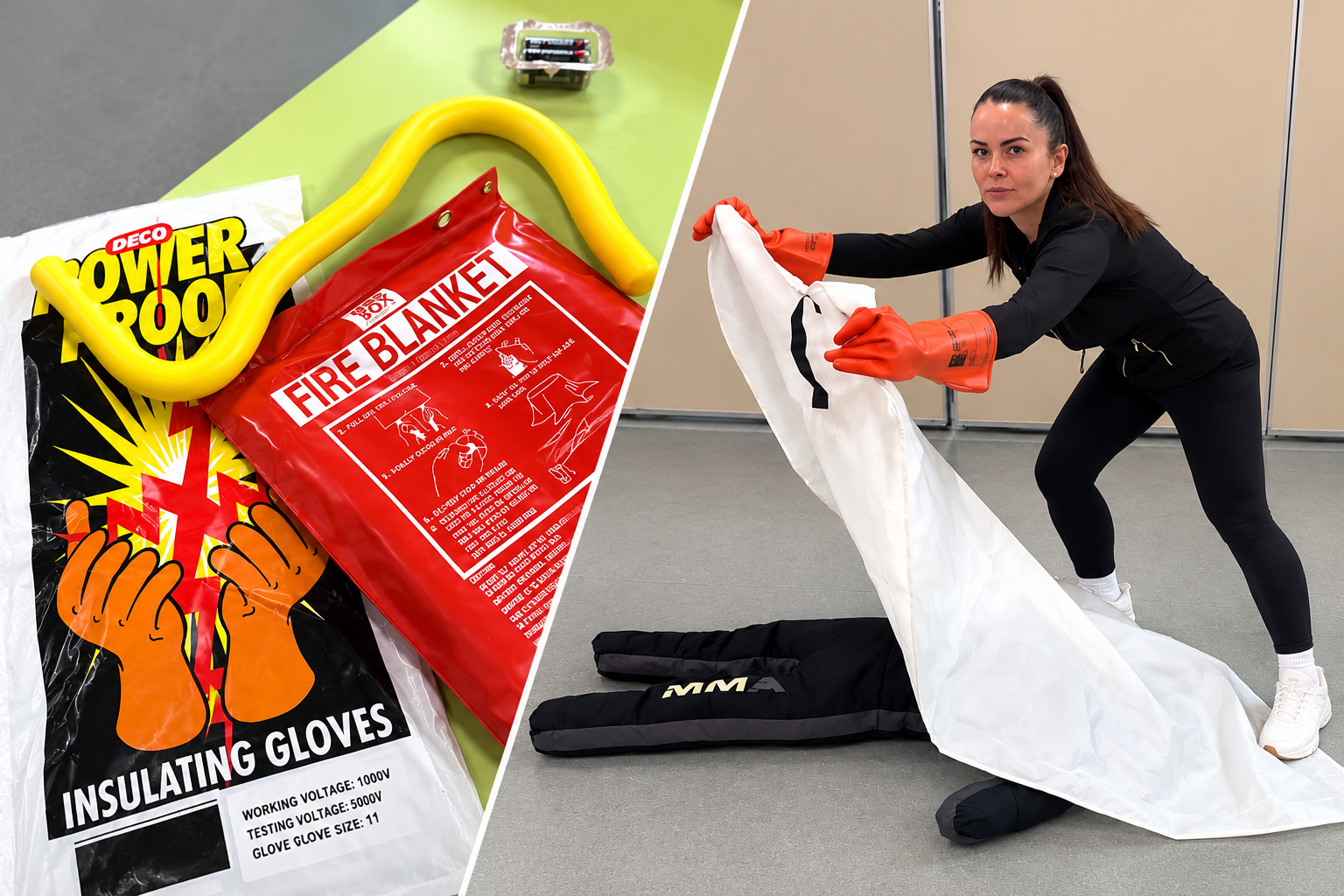
This may include purpose-designed electrical insulating gloves and other equipment specified in the workplace’s emergency rescue procedures.
Rescue equipment must be suitable, correctly maintained and used within its limitations.
Step 3: Isolate the electrical supply
Where it is safe and possible, disconnect the relevant electrical supply using the designated emergency isolation control.
This is intended to remove the electrical hazard before contact with the casualty occurs.
Do not assume that equipment is de-energised merely because a switch has been operated.
Step 4: Use an insulated rescue crook where required
In some low-voltage panel emergencies, a trained rescuer may need to use a purpose-designed insulated rescue crook or hook.
This equipment is intended to assist with separating a casualty from an electrical hazard while helping the rescuer maintain a safer distance.
The technique must be performed in accordance with practical training, equipment specifications and the applicable emergency procedures.
An insulated rescue tool does not make every electrical situation safe.
Step 5: Separate the casualty from the electrical source
Once appropriate safety precautions are in place, the trained rescuer may be able to free the casualty using the approved rescue method.
Direct contact with the casualty must be avoided while they may remain energised.
The rescuer must also consider exposed conductors, surrounding equipment and other hazards that could cause a second electrical injury.
Step 6: Address immediate fire hazards
An electrical incident may also involve burning clothing or nearby equipment.
Where the casualty’s clothing is on fire, a fire blanket may be used if the electrical danger has been controlled and it is safe to approach.
Fire blankets help smother flames but do not protect against electrical current.
Suitable firefighting equipment should only be used when the person is trained to do so and the conditions are safe.
Step 7: Move the casualty to a safer location
If the immediate area remains hazardous or unsuitable for first aid, it may be necessary to move the casualty.
One method covered in rescue training is the single-person emergency drag.
This involves positioning behind the casualty, supporting the upper body and moving them to a safer location using an appropriate technique.
Emergency movement should only be undertaken when necessary to protect the casualty from immediate danger and when it can be performed safely.
Step 8: Call for assistance and provide first aid
Once the scene is safe, assess the casualty and arrange emergency medical assistance.
Follow the DRSABCD approach to check responsiveness, breathing and the need for CPR or defibrillation.
Other injuries, such as burns, bleeding or shock, should also be managed according to the casualty’s condition and the rescuer’s training.
Step 9: Secure the worksite
After the immediate emergency response, the hazardous area must be controlled to prevent further incidents.
Workers and bystanders should be kept away from dangerous equipment.
Where appropriate, temporary barriers, warning signs or danger tape can be used to restrict access until authorised personnel have assessed the site.
The incident must also be reported in accordance with workplace and regulatory requirements.
Important: These stages describe the principles taught in LVR training. They are not instructions for an untrained person to approach live electrical equipment. The appropriate response depends on the actual hazards, rescue equipment, workplace procedures and the rescuer’s competence.
First Aid Following an Electrical Accident
Once a casualty has been safely separated from electrical danger, immediate first aid may be necessary.
Electrical incidents can result in several types of injuries, including electric shock, burns, smoke inhalation and injuries caused by falls or impact.
Follow the DRSABCD action plan
The DRSABCD approach provides a structured way to assess a casualty and respond to a potentially life-threatening emergency.
- Danger: Check that the scene is safe for everyone.
- Response: Determine whether the casualty responds.
- Send for help: Call Triple Zero (000) and arrange for an AED.
- Airway: Open and assess the airway.
- Breathing: Check whether the person is breathing normally.
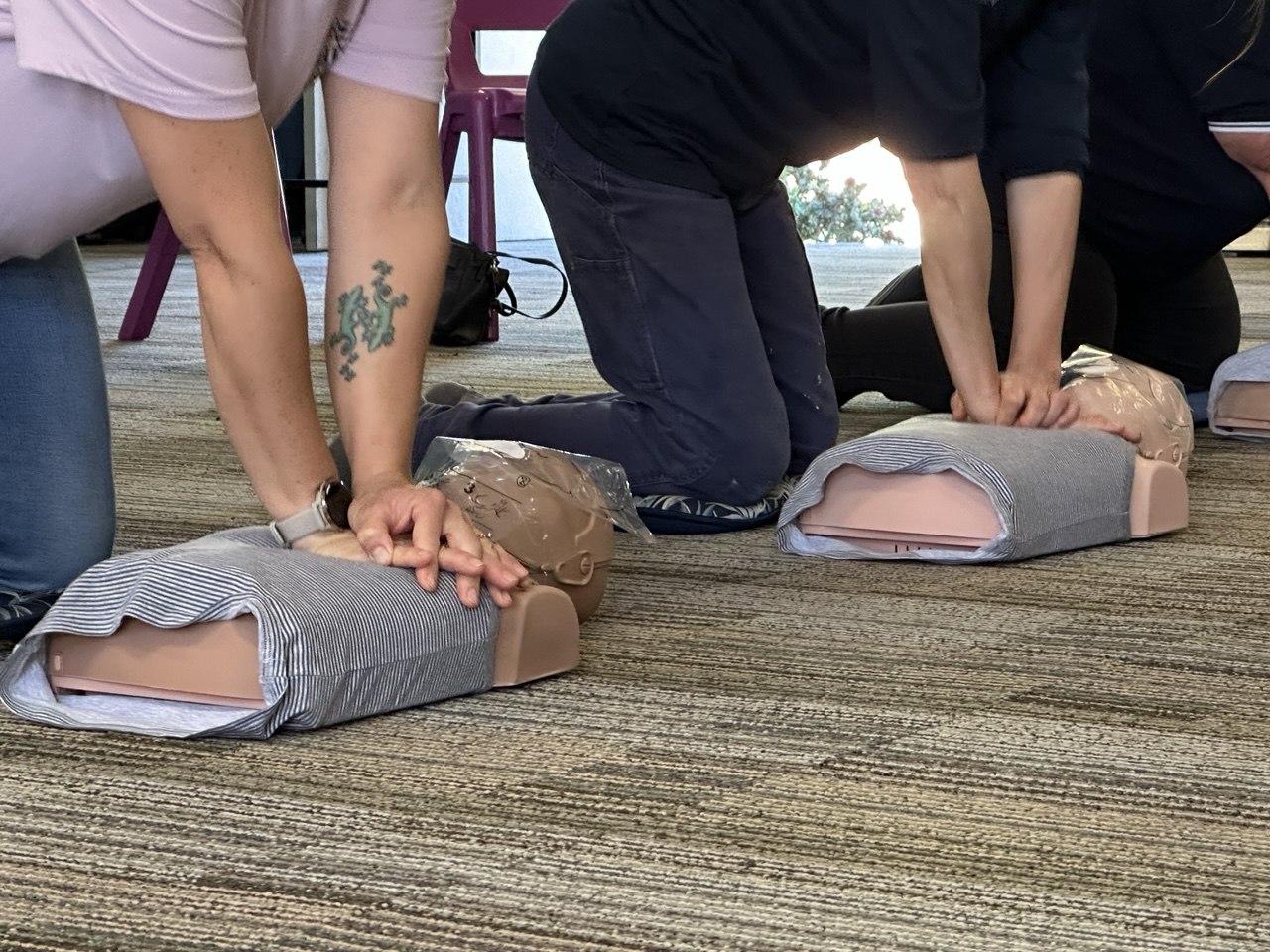
- CPR: If the person is unresponsive and not breathing normally, commence CPR.
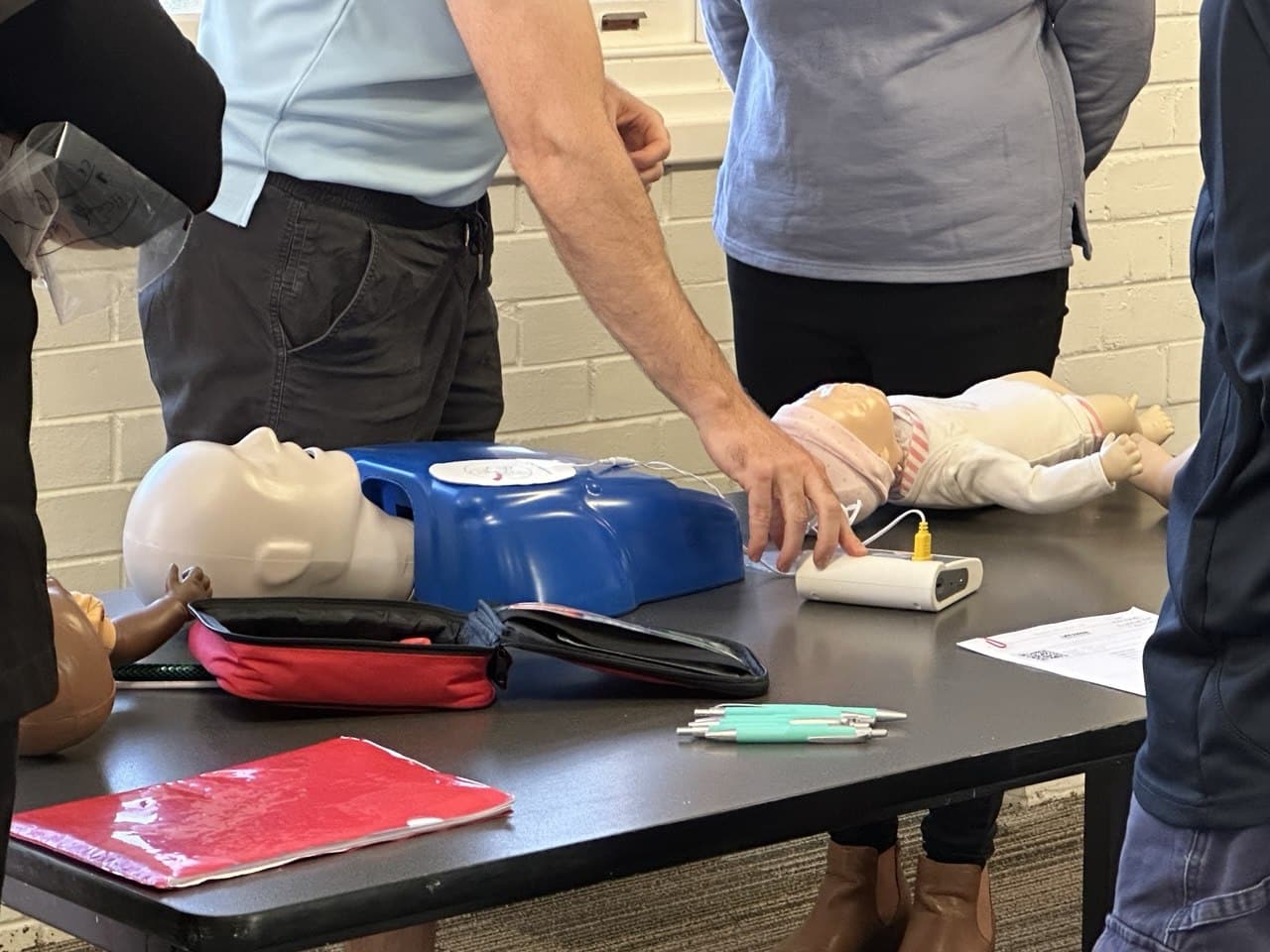
- Defibrillation: Apply an AED as soon as it becomes available and follow its instructions.
For an adult requiring CPR, the standard sequence is 30 chest compressions followed by two rescue breaths, where the rescuer is trained and able to provide them.
If the casualty is unconscious but breathing normally, place them in the recovery position where appropriate and continue monitoring their breathing.
Managing burns and other injuries
Electrical accidents may cause burns that are more serious than they first appear.
Once the electrical hazard is controlled, appropriate first aid for burns includes cooling the affected area with cool running water for 20 minutes where safe and practicable.
Other injuries, such as bleeding, fractures or smoke inhalation, may require additional first aid and emergency medical assistance.
Medical assessment is important following an electrical shock, even if the person remains conscious and reports feeling well.
Electrical Fire Safety and Fire Blankets
Electrical incidents can sometimes involve burning cables, equipment or clothing.
Fire response procedures must account for the possibility that electrical equipment remains energised.
A suitable fire extinguisher may be used for an electrical equipment fire only when the person is trained, the extinguisher is appropriate and it is safe to intervene.
Where a casualty’s clothing is burning, a fire blanket can help extinguish the flames by limiting the oxygen available to the fire.
The blanket is generally applied carefully to cover the burning area while protecting the rescuer from the flames.
However, it is essential to recognise that a fire blanket is not an electrical insulating device.
The casualty must not be approached while dangerous electrical contact remains.
Special Considerations for Fallen Power Lines
Not every electrical emergency is suitable for a low-voltage panel rescue.
Fallen overhead power lines and damaged electricity network infrastructure can present extremely serious hazards.
If a person, vehicle or object is in contact with a fallen power line, do not approach.
Contact Triple Zero (000), keep other people away and wait for emergency services or the electricity network operator to make the area safe.
Where a power line has fallen onto a vehicle, occupants should generally remain inside unless there is an immediate life-threatening danger, such as fire, and follow emergency services’ instructions.
A minimum exclusion distance of 10 metres is commonly used for fallen power lines, although greater distances may be required.
Low Voltage Rescue training for electrical panels should not be confused with training or authorisation to conduct rescues involving overhead power lines.
Australian Electrical Safety Standards and Regulations
Electrical safety requirements in Australia are supported by legislation, codes of practice, Australian Standards and workplace procedures.
The requirements that apply depend on the state or territory, industry and type of electrical work.
For electricians and electrical contractors in Western Australia, relevant requirements include the Electricity Act 1945, Electricity (Licensing) Regulations 1991 and applicable work health and safety legislation.
Important technical references include:
- AS/NZS 4836: Safe working on or near low-voltage and extra-low-voltage electrical installations and equipment.
- AS 2225: Insulating gloves for electrical purposes.
- AS/NZS 3760: In-service safety inspection and testing of electrical equipment, where applicable.
- WA Code of Practice for Persons Working on or Near Energised Electrical Installations.
- WA Managing Electrical Risks in the Workplace Code of Practice.
These documents help establish requirements for electrical work, protective equipment, risk management and safe working practices.
Electrical businesses should ensure they follow the current versions of all applicable legislation, standards and workplace procedures.
Why Low Voltage Rescue and CPR Training Are Important
Electrical emergencies often require two types of response.
The first involves making the situation safe and rescuing the casualty without exposing anyone else to electrical danger.
The second involves assessing the injured person and providing potentially lifesaving first aid.
An electric shock can interfere with normal heart function and breathing, which is why CPR and defibrillation skills are closely connected with electrical rescue training.
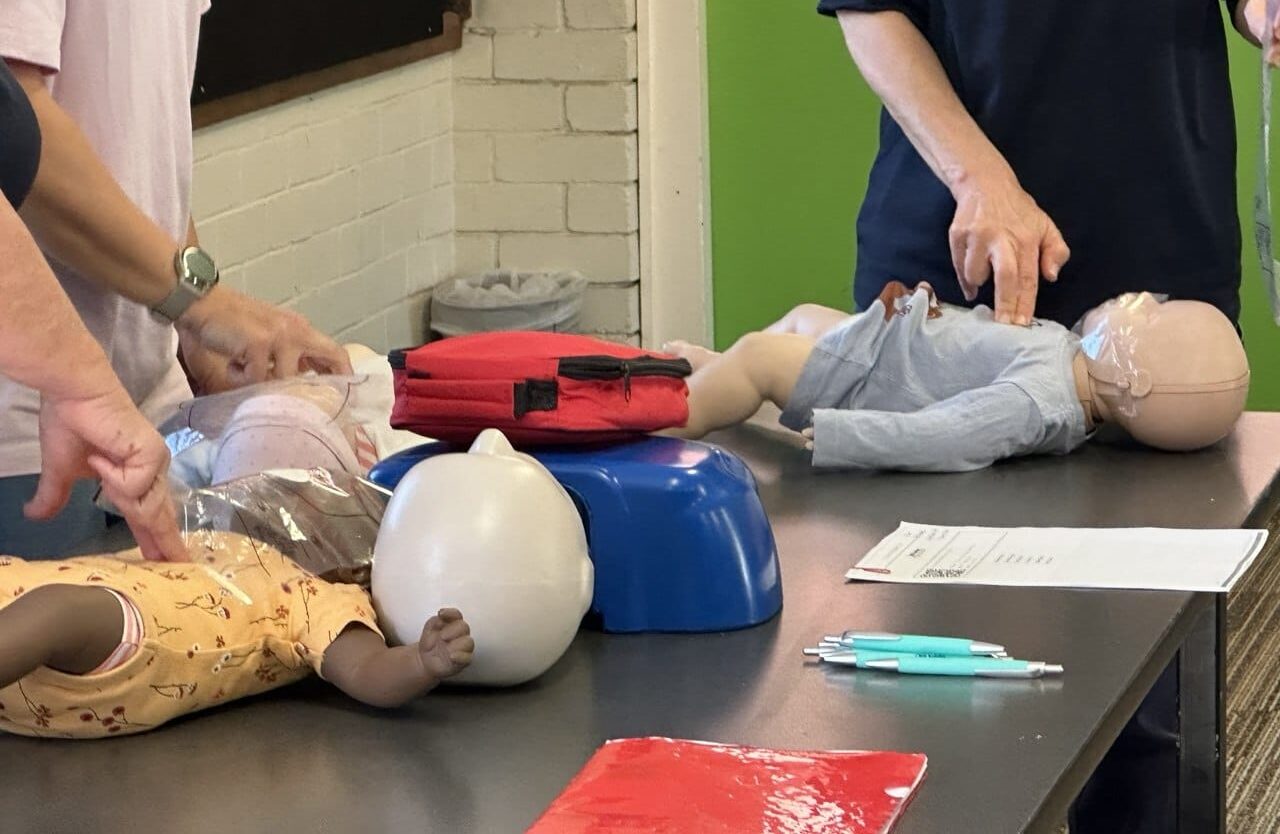
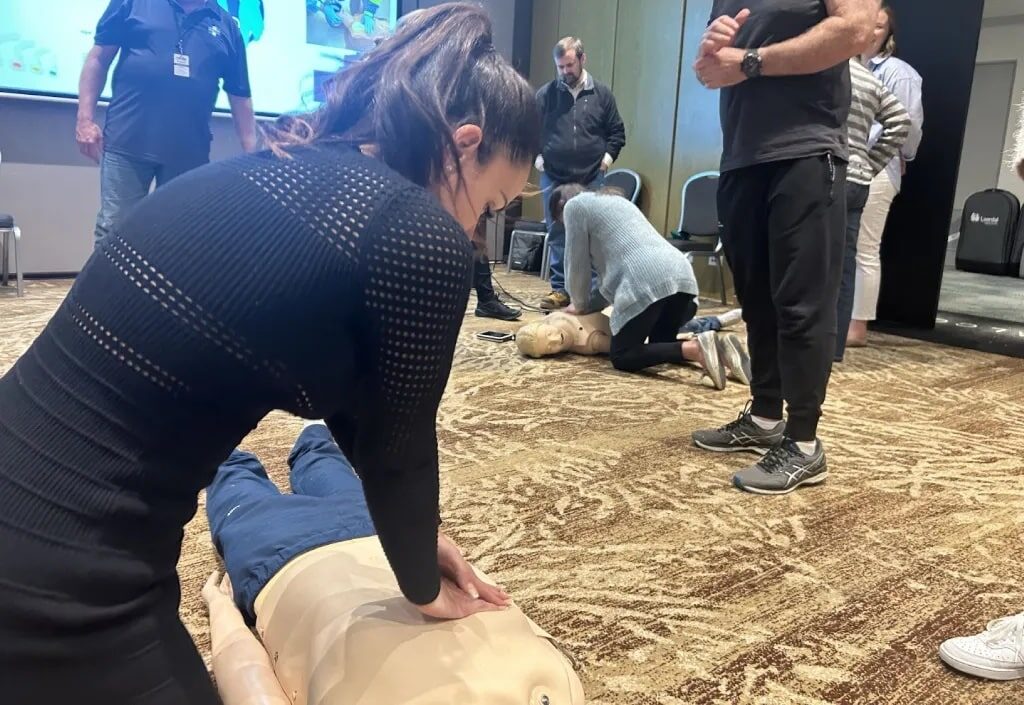
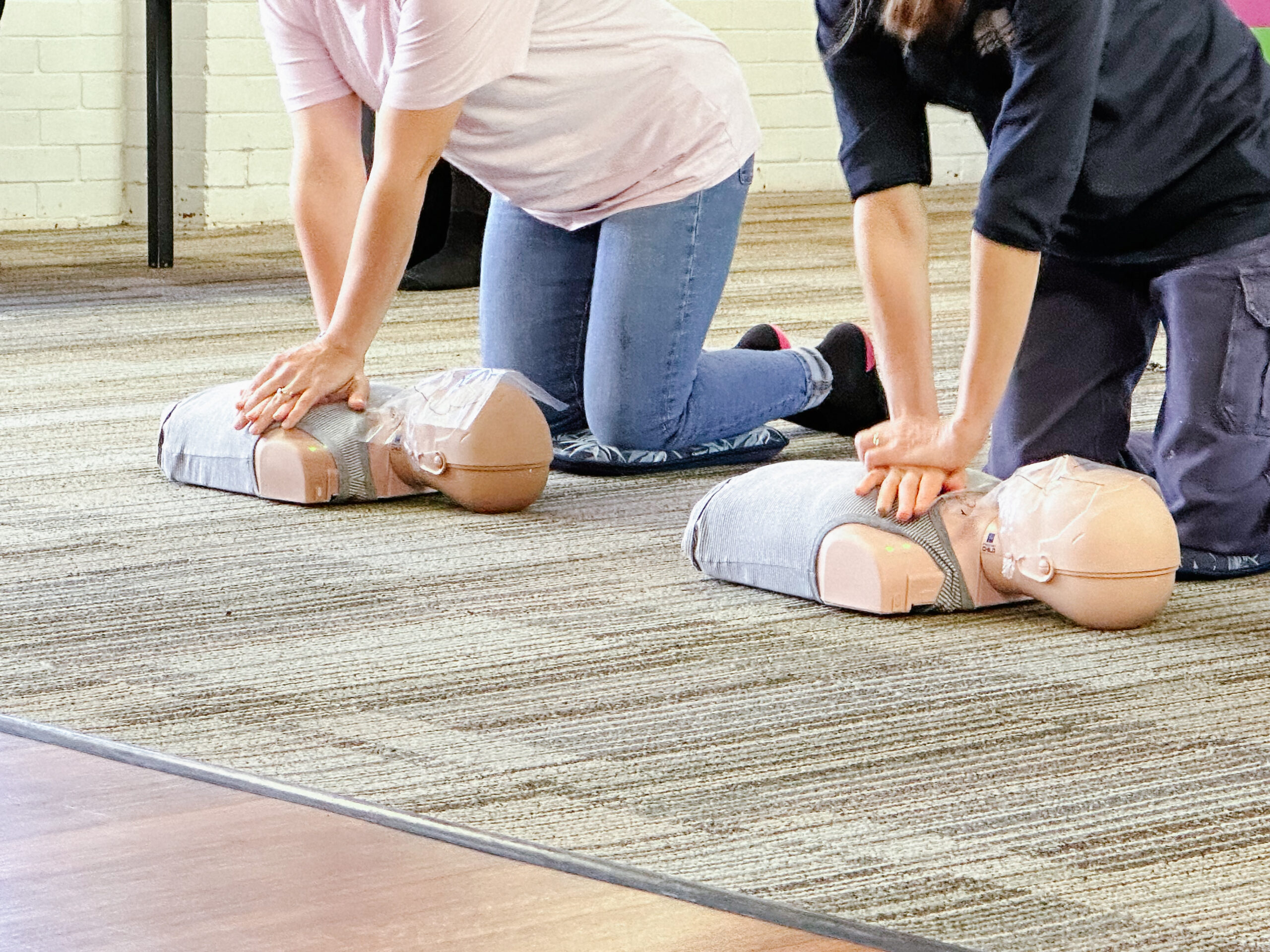
LVR training helps workers understand how to respond to an electrical incident, while CPR training prepares them to recognise cardiac arrest, perform resuscitation and use an AED.
For electrical businesses, these skills are particularly relevant to workers involved in switchboard work, electrical maintenance, testing and other tasks where electrical hazards may be present.
Onsite Low Voltage Rescue and CPR Training in Perth
At WJS Training, we help Perth electrical businesses organise practical Low Voltage Rescue, CPR and First Aid training for their teams.
Rather than sending employees to an external training centre, our trainers come to your workplace, making group training easier to organise around your team’s schedule.
We offer two training options for workplace groups of six or more.
LVR + CPR Training — $140 per person
Units: UETDRMP018 Perform Rescue from a Live Low Voltage Panel + HLTAID009 Provide Cardiopulmonary Resuscitation.
Approximately 1.5 hours of practical training, plus online theory.
LVR + First Aid Training — $235 per person
Units: UETDRMP018 Perform Rescue from a Live Low Voltage Panel + HLTAID011 Provide First Aid.
Approximately 2.5 hours of practical training, plus online theory.
Our onsite training is suitable for relevant workplace groups, including residential and commercial electrical contractors, industrial electricians, electrical maintenance companies, switchboard specialists, solar and battery installers, and other electrical businesses across Perth and surrounding areas.
Organise LVR Training for Your Electrical Team
Whether your team needs to refresh existing skills or prepare for upcoming electrical work, WJS Training can help you arrange onsite group training at your workplace.
Get a Group Quote for LVR Training
Training and assessment delivered on behalf of Allens Training Pty Ltd RTO 90909.
This article provides general electrical safety information and does not replace nationally recognised practical training, site-specific risk assessments, workplace emergency procedures or applicable regulatory requirements.