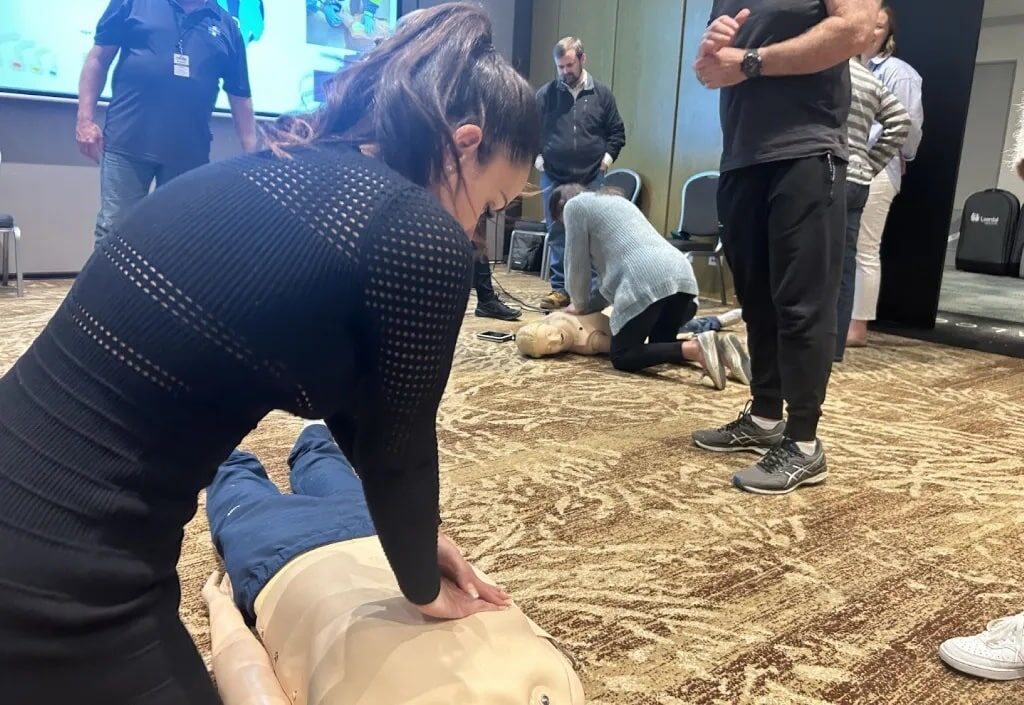

This post covers the key differences when performing CPR and using an AED on children and infants.
For general CPR steps and nationally recognised training, learn more about our CPR training and CPR refresher in Perth.
How to Perform CPR on a Child or Infant
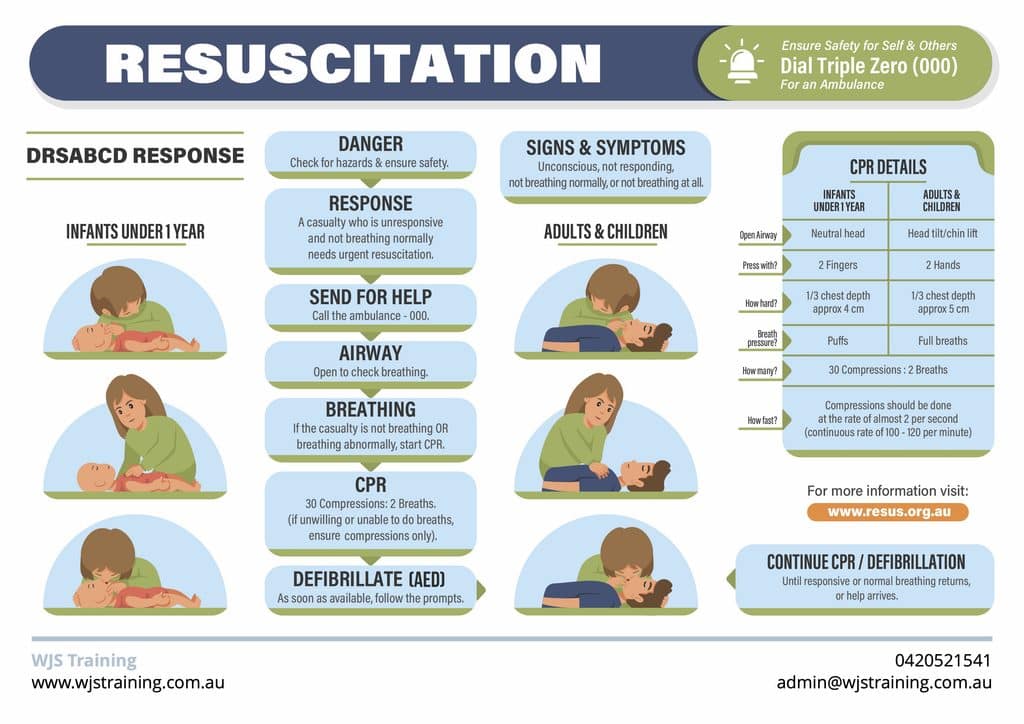
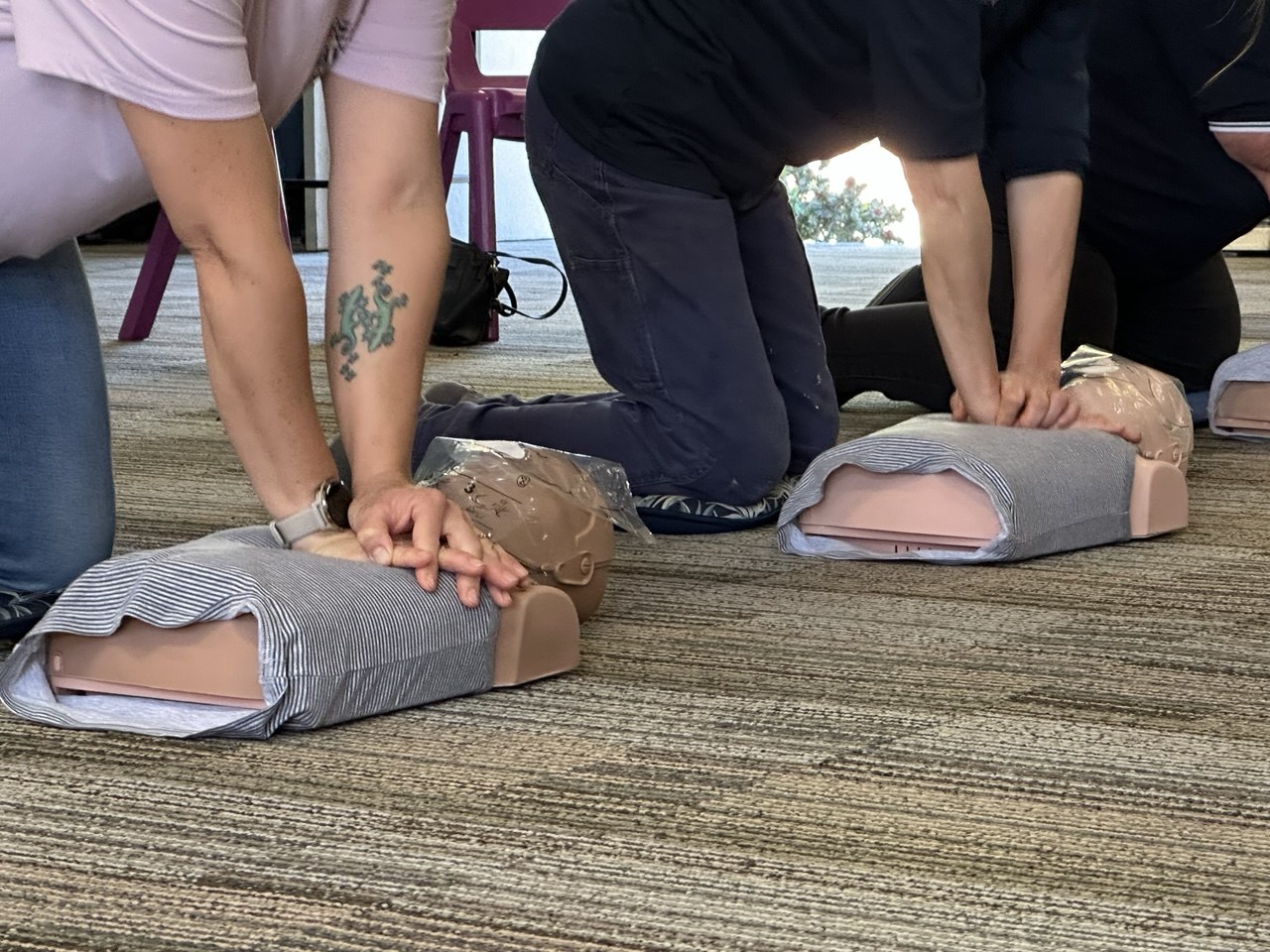
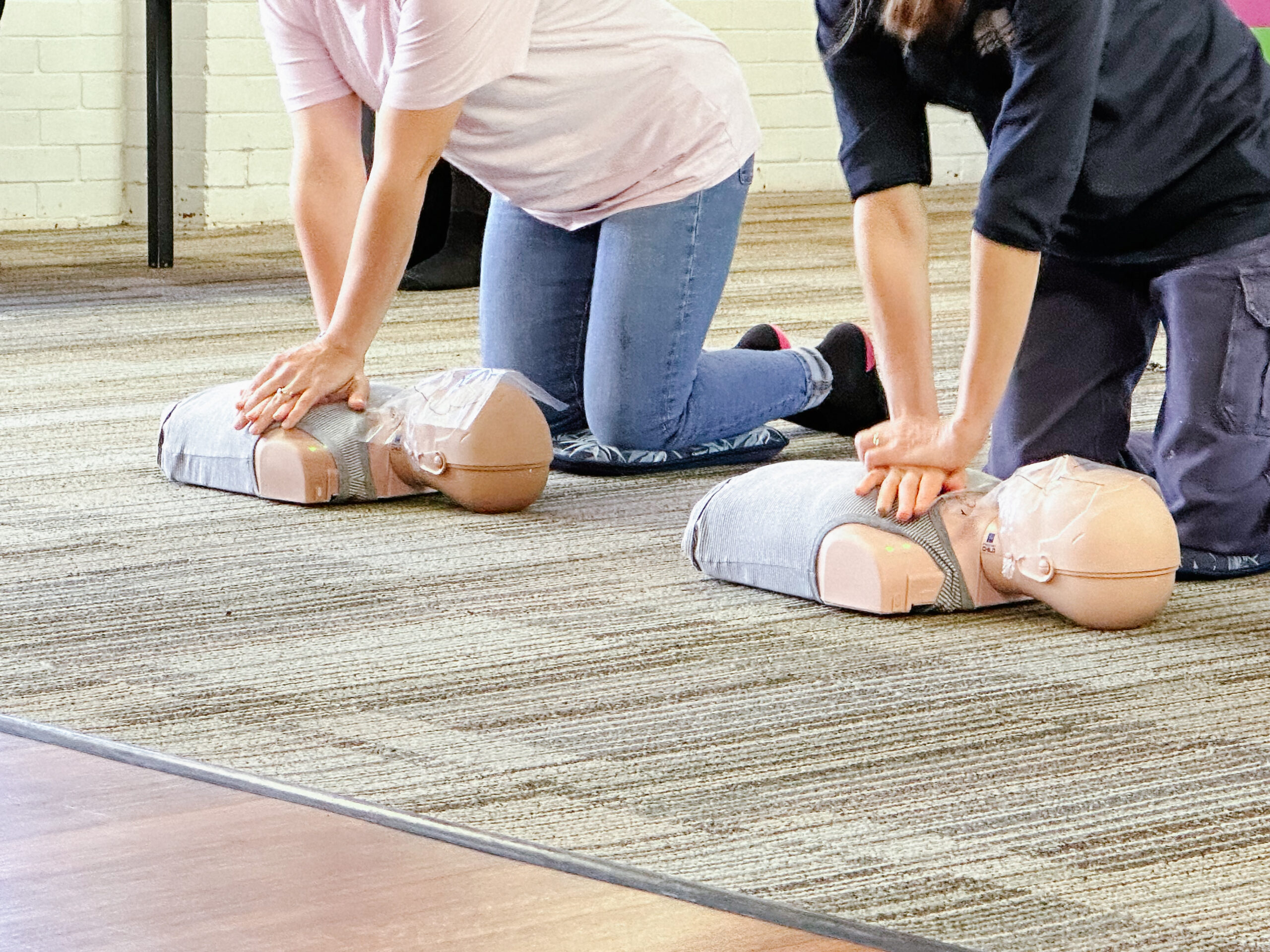
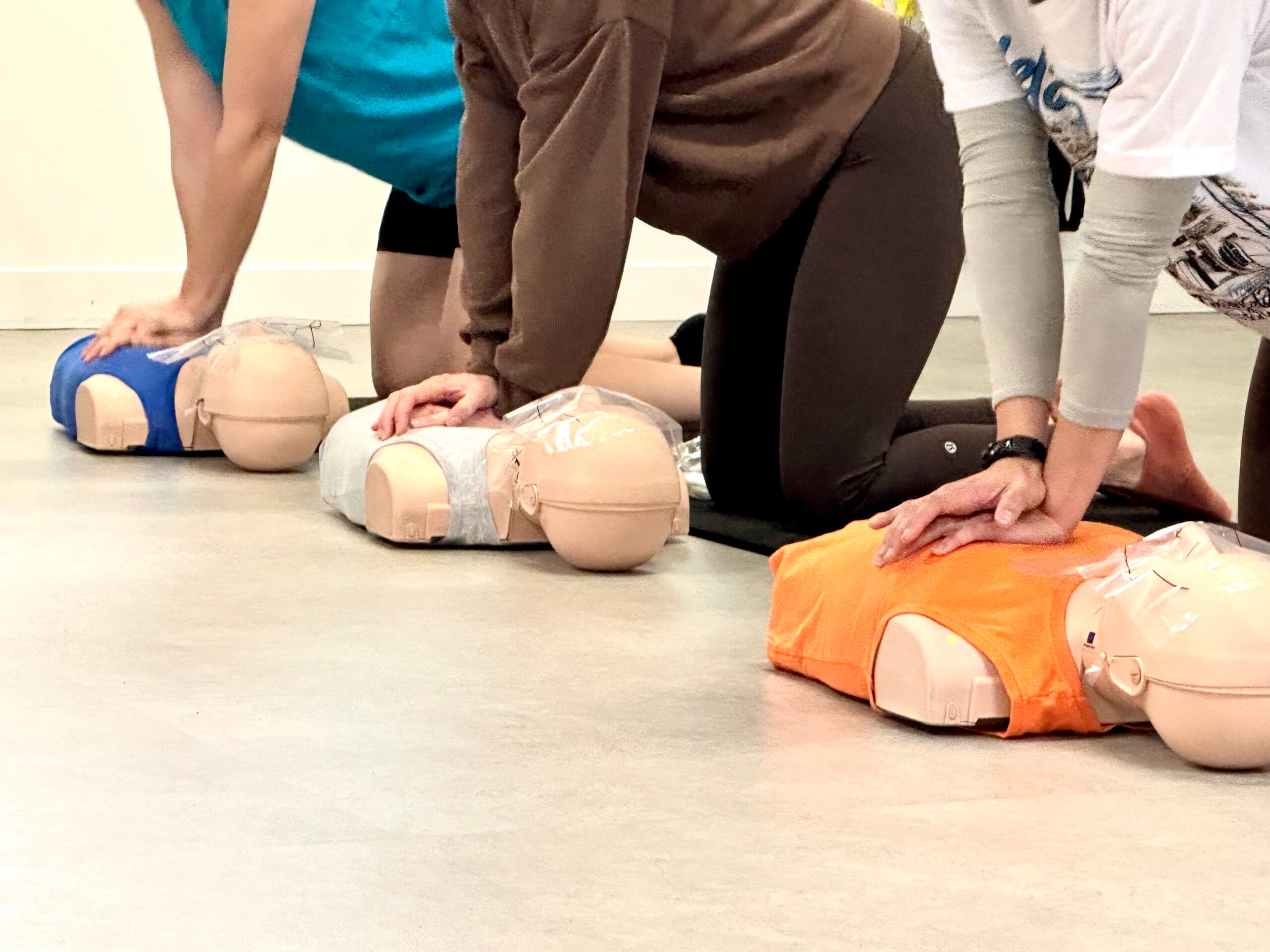
When performing CPR on a child, compress the chest to approximately one third of its depth — approximately five centimetres for a child and four centimetres for an infant.
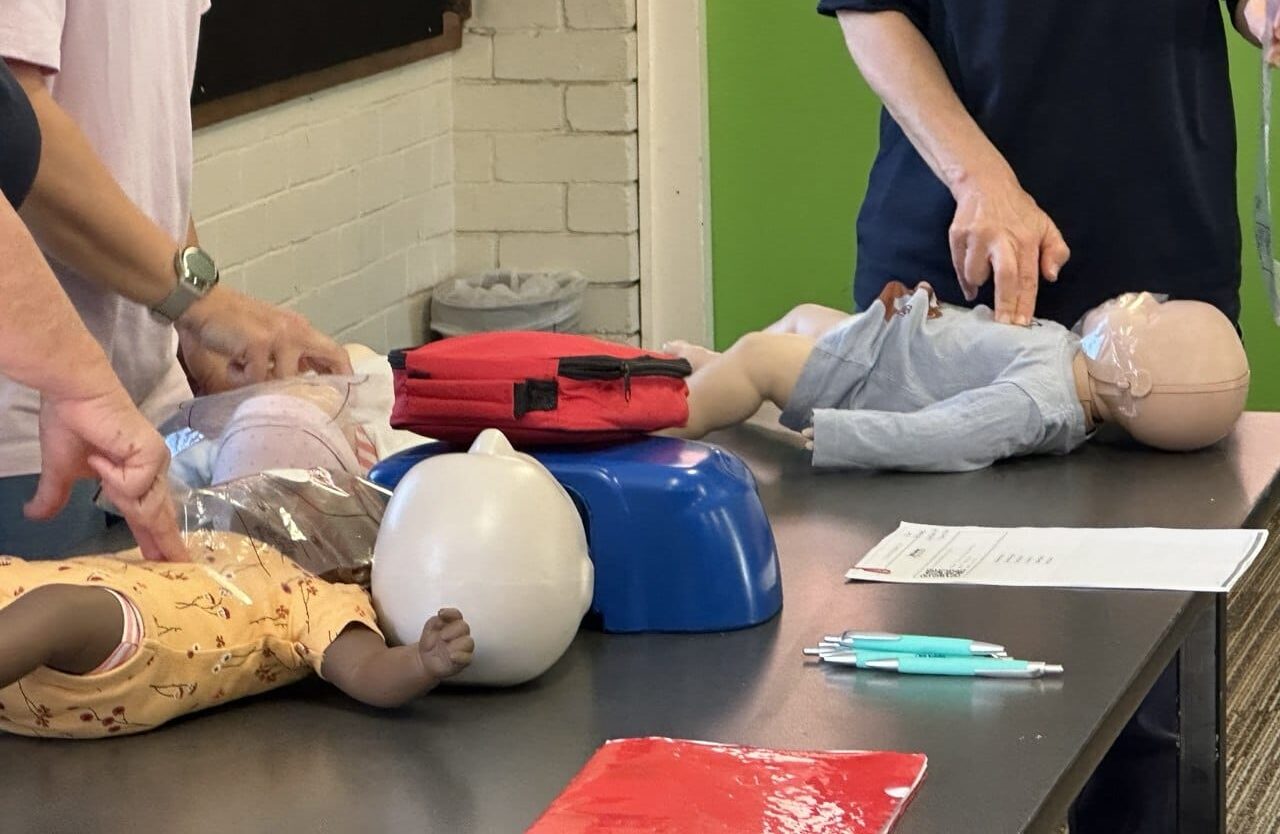
Use one or two hands for a child, depending on the child’s size. For an infant, use two fingers on the lower half of the breastbone.
When giving rescue breaths to an infant, use gentle puffs — just enough to see the chest rise. Cover both the mouth and nose with your mouth to create a seal.
Why Are Rescue Breaths Important for Children and Infants?
Remember that cardiac arrest in children is usually caused by a breathing problem rather than a heart problem. This is why rescue breaths are essential when performing CPR on a child or infant.
While rescue breaths are the priority for children, if you are unable to provide them, compressions-only CPR is still better than no CPR at all.
How to Use an AED on a Child or Infant
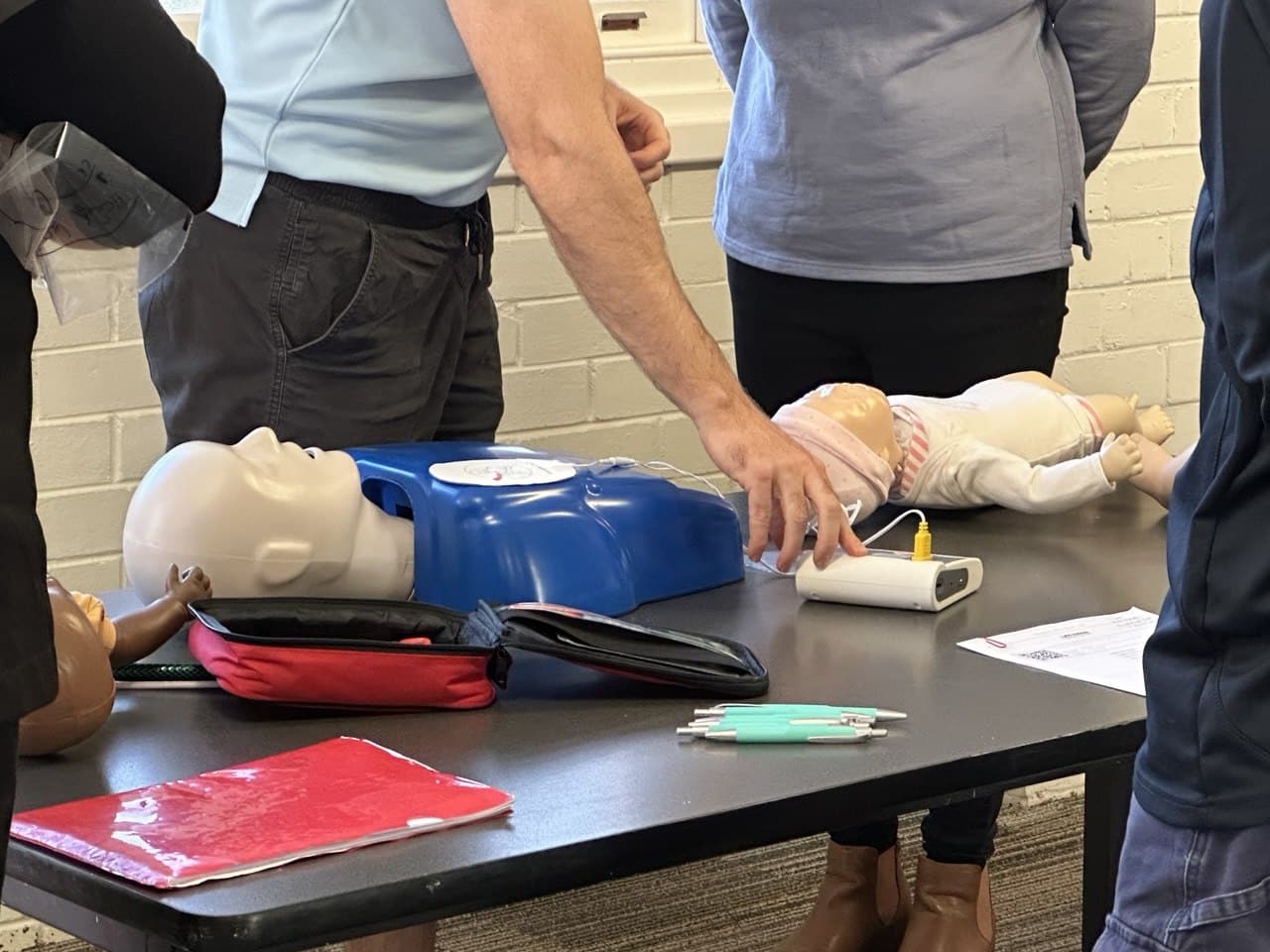
If using an AED on a child who appears to be older than eight years, standard adult pads are suitable. For children who appear younger than eight, including infants, use paediatric pads and a paediatric mode if available.
If the AED does not have a paediatric mode or the paediatric pads are not available, use standard adult pads. Just ensure the pads do not touch each other on the child’s chest.
If the pads are too large and there is a risk of them touching, use the front-and-back position — place one pad on the front of the chest and one on the back, between the shoulder blades.
Follow the AED Voice Prompts
The AED will analyse the child’s heart rhythm and determine whether a shock is needed — follow the voice prompts just as you would for an adult.
Do not delay using an AED on a child because you do not have paediatric pads. Using adult pads is better than not using an AED at all.