
If a person is unresponsive and not breathing normally, they need CPR. CPR stands for cardiopulmonary resuscitation and this is the combination of chest compressions and rescue breathing. The purpose of CPR is to maintain blood flow to the brain and vital organs until emergency services arrive.
For nationally recognised training, learn more about our CPR course in Perth (HLTAID009 Provide Cardiopulmonary Resuscitation).
CPR should commence with chest compressions. Place the person on their back on a firm, flat surface.
How to Perform Chest Compressions
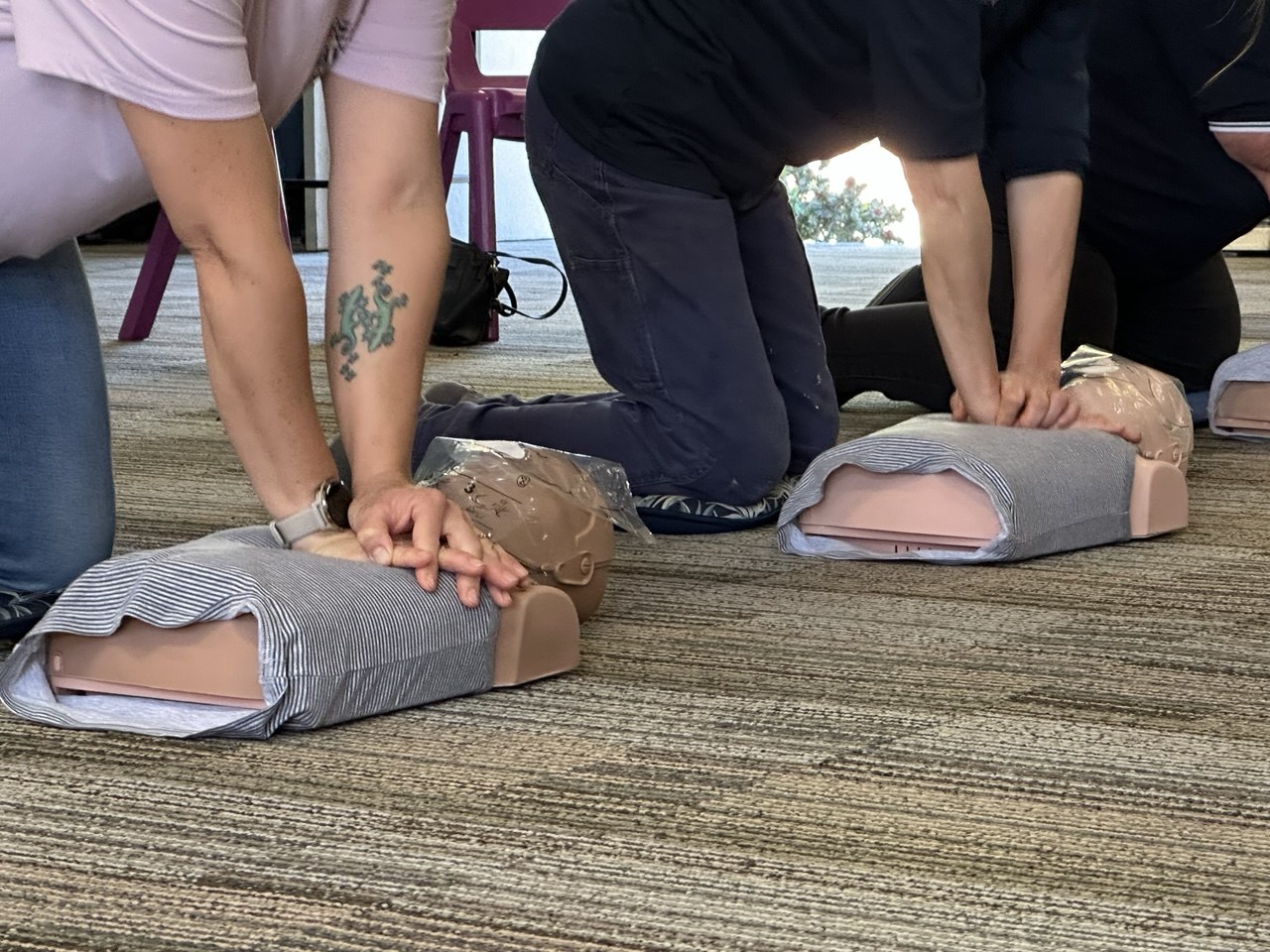
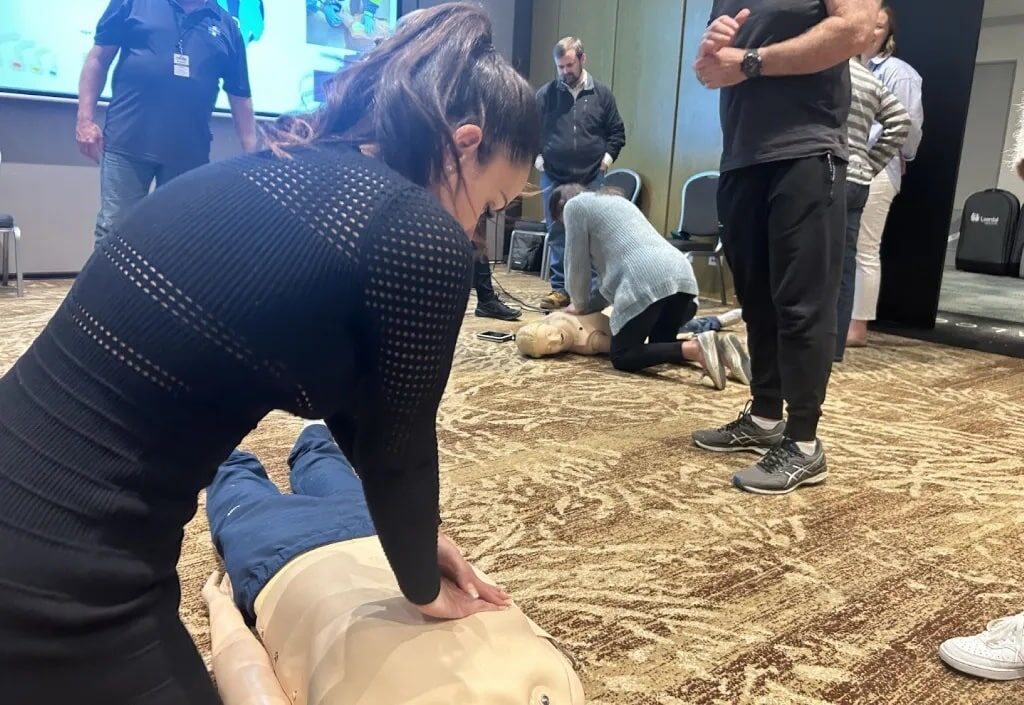
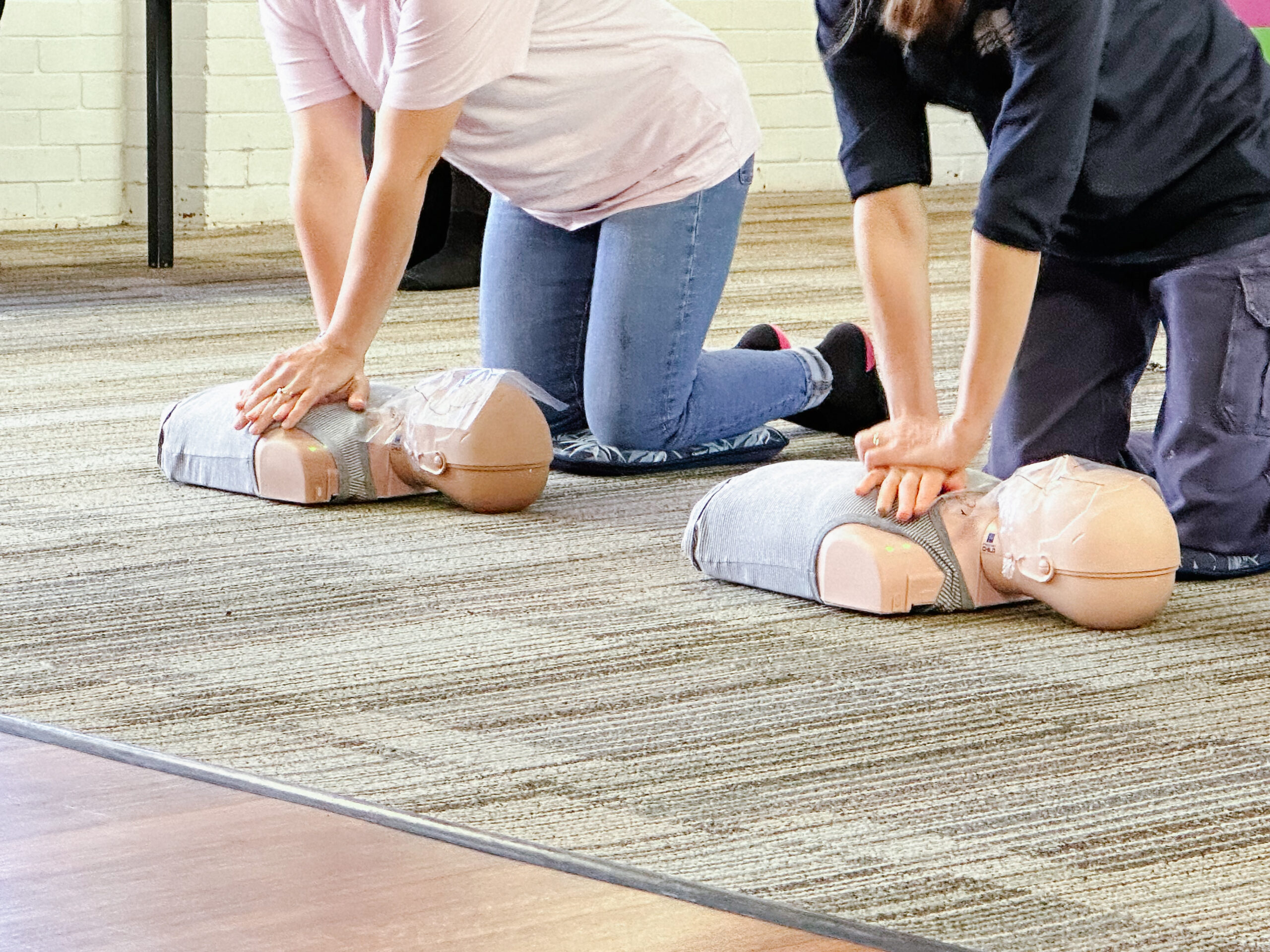
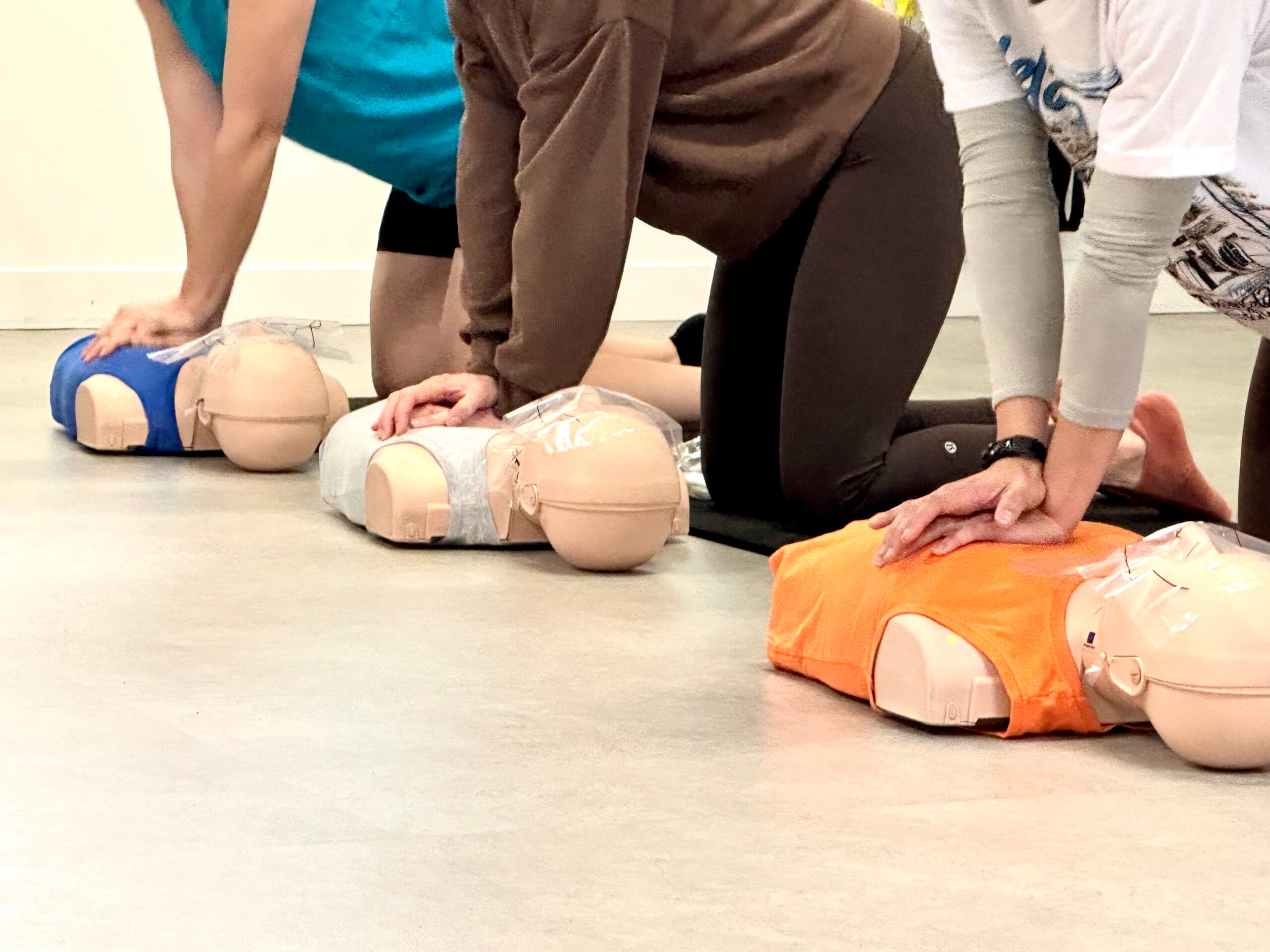
For an adult, place the heel of one hand in the centre of the chest on the lower half of the sternum. Place your other hand on top. With your arms straight and your shoulders directly over your hands, compress the chest to approximately one third of the chest depth.
For a child, use one or two hands in the same position and compress to approximately one third of the chest depth.
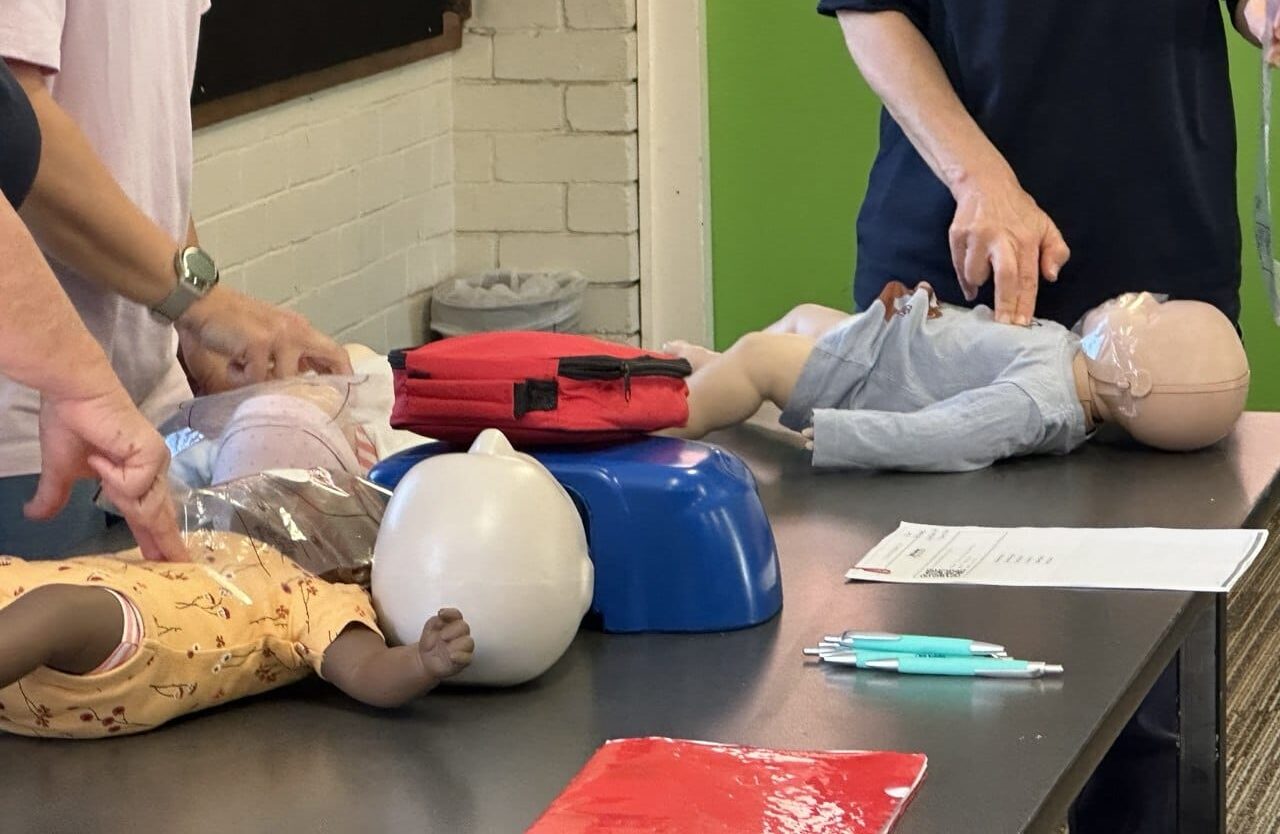
For an infant, use two fingers placed in the centre of the chest and compress to approximately one third of the chest depth.
CPR Compression Rate
Deliver compressions at a rate of one hundred to one hundred and twenty per minute — that is almost two compressions per second. Allow the chest to fully recoil between each compression. Keep your compressions rhythmic, smooth and with equal time for pushing down and releasing.
This 3D animation shows what happens inside the body during CPR. See how the rate and depth of chest compressions affect CPR when compressions are too fast, too slow.
How to Give Rescue Breaths
After thirty compressions, deliver two rescue breaths. To give a rescue breath to an adult or child, tilt the head back, lift the chin, pinch the nose closed, and blow steadily into the mouth until you see the chest rise.
For an infant, place the head in a neutral position — do not tilt it back — and cover both the mouth and nose with your mouth. Give a small, gentle breath until the chest rises.
The ratio is thirty compressions to two breaths for all ages. Continue this cycle without interruption.
Can You Perform CPR Without Rescue Breaths?
If you are trained and willing to give rescue breaths, you are encouraged to do so. Rescue breaths add fresh oxygen into the lungs so the blood you are circulating actually carries usable oxygen. This is the gold standard.
If you are unable or unwilling to give rescue breaths, performing chest compressions alone is still valuable and is better than doing nothing.
When Should Rescuers Swap During CPR?
If more than one rescuer is available, swap the person performing compressions at least every two minutes. Chest compressions become less effective as the rescuer fatigues, often without the rescuer realising.
When Should You Stop CPR?
Continue CPR until any of the following occurs: the person responds or begins breathing normally, it is impossible for you to continue due to exhaustion, a health care professional arrives and takes over, or a health care professional directs you to stop.
Can CPR Cause Rib Fractures?
Rib fractures and other injuries can occur during CPR. You should commence CPR for any person you believe to be in cardiac arrest without concern about causing harm.
What If the Person Is Unresponsive but Breathing Normally?
If a person is unresponsive but is breathing normally, they do not need CPR. Place them in the recovery position — on their side with their airway open — and monitor their breathing until help arrives.