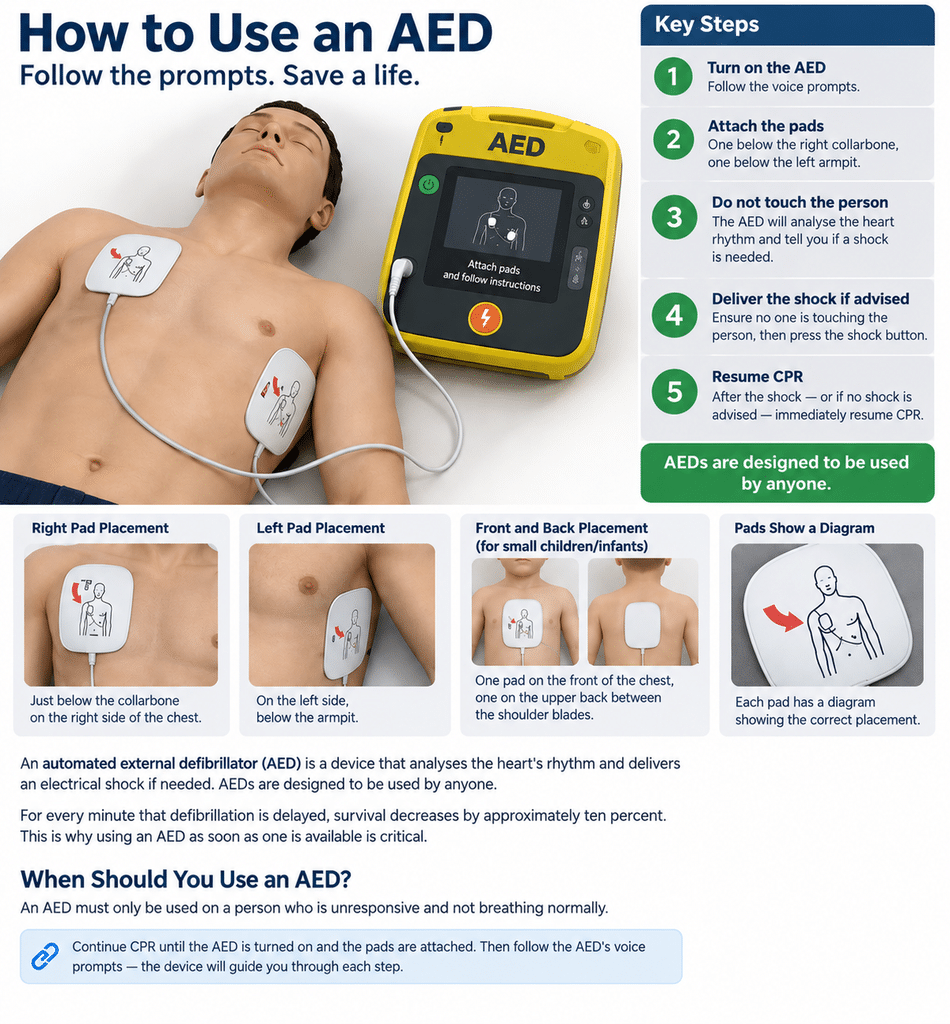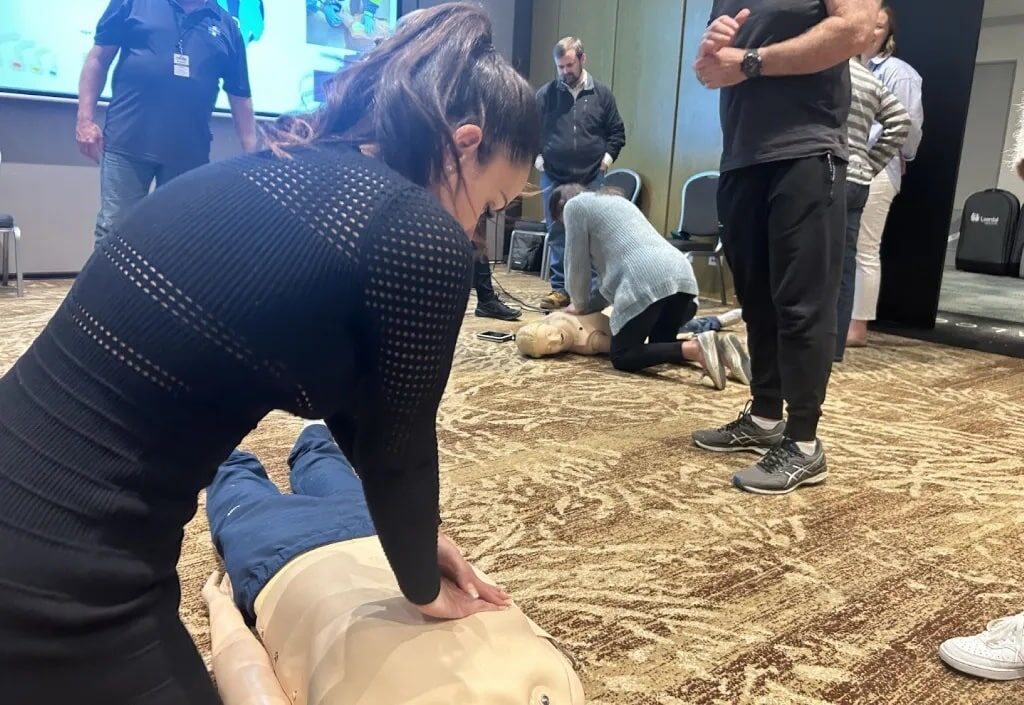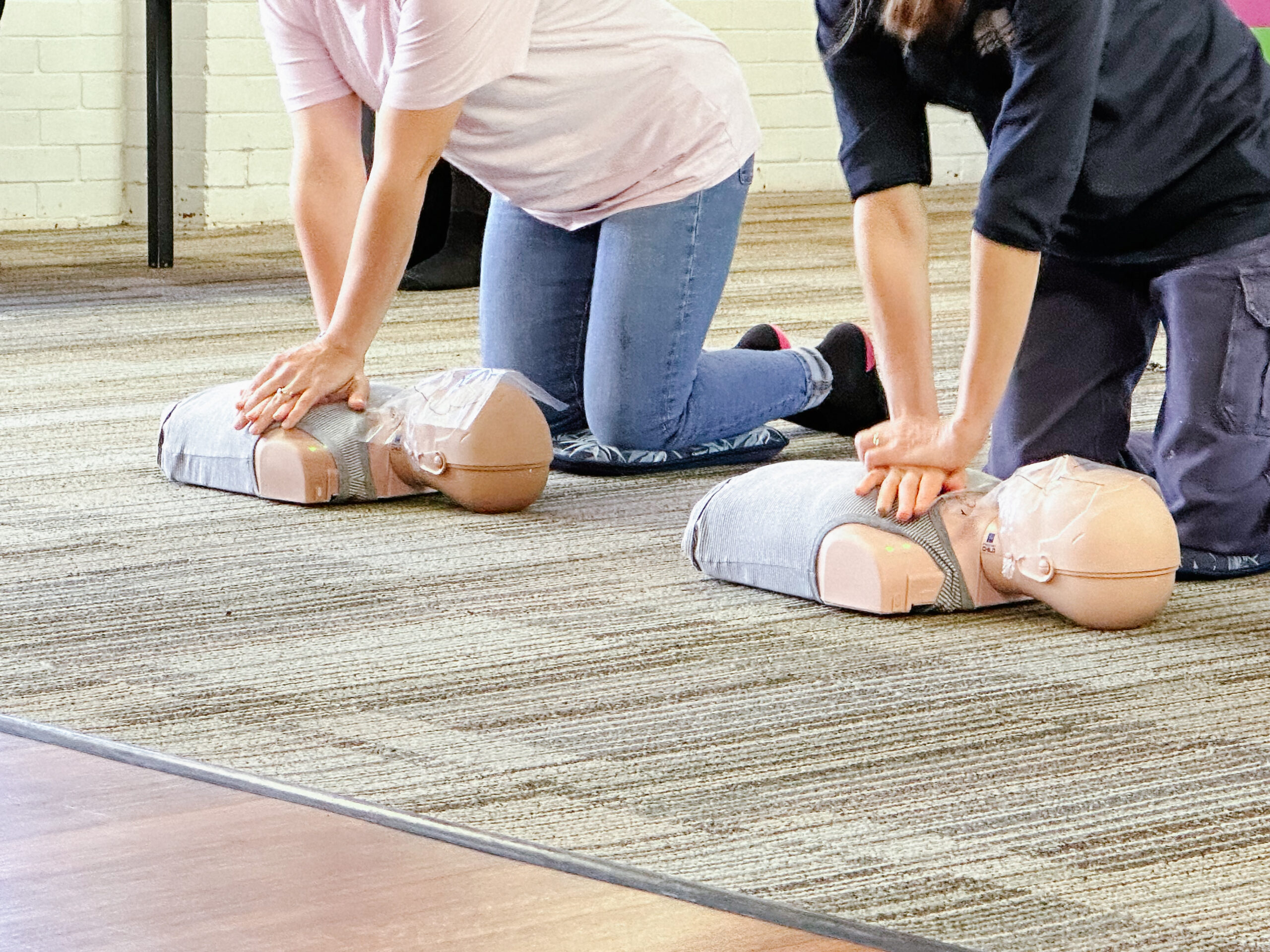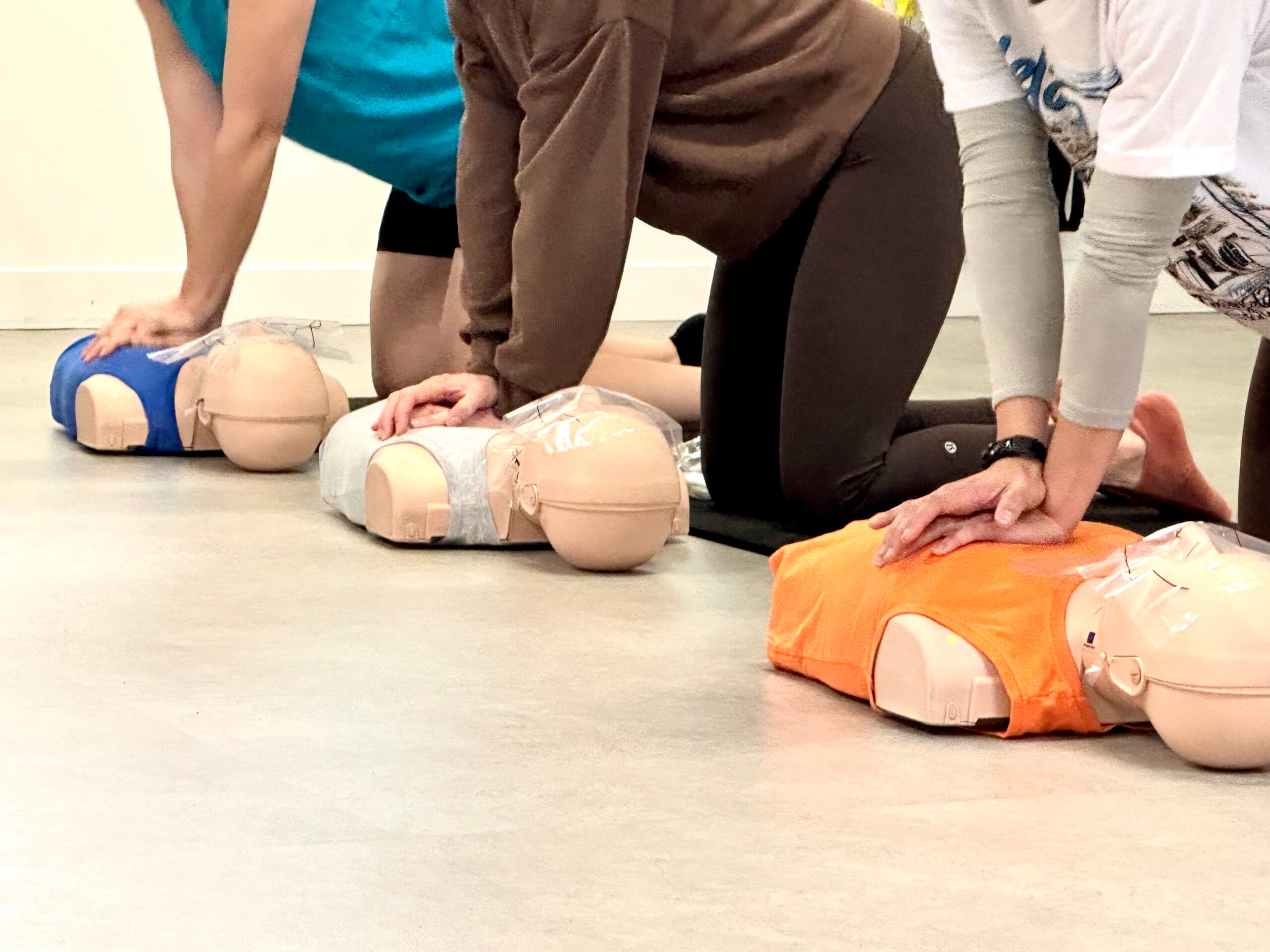

An automated external defibrillator (AED) is a device that analyses the heart’s rhythm and delivers an electrical shock if needed. AEDs are designed to be used by anyone.
For every minute that defibrillation is delayed, survival decreases by approximately ten percent. This is why using an AED as soon as one is available is critical.
When Should You Use an AED?
An AED must only be used on a person who is unresponsive and not breathing normally.
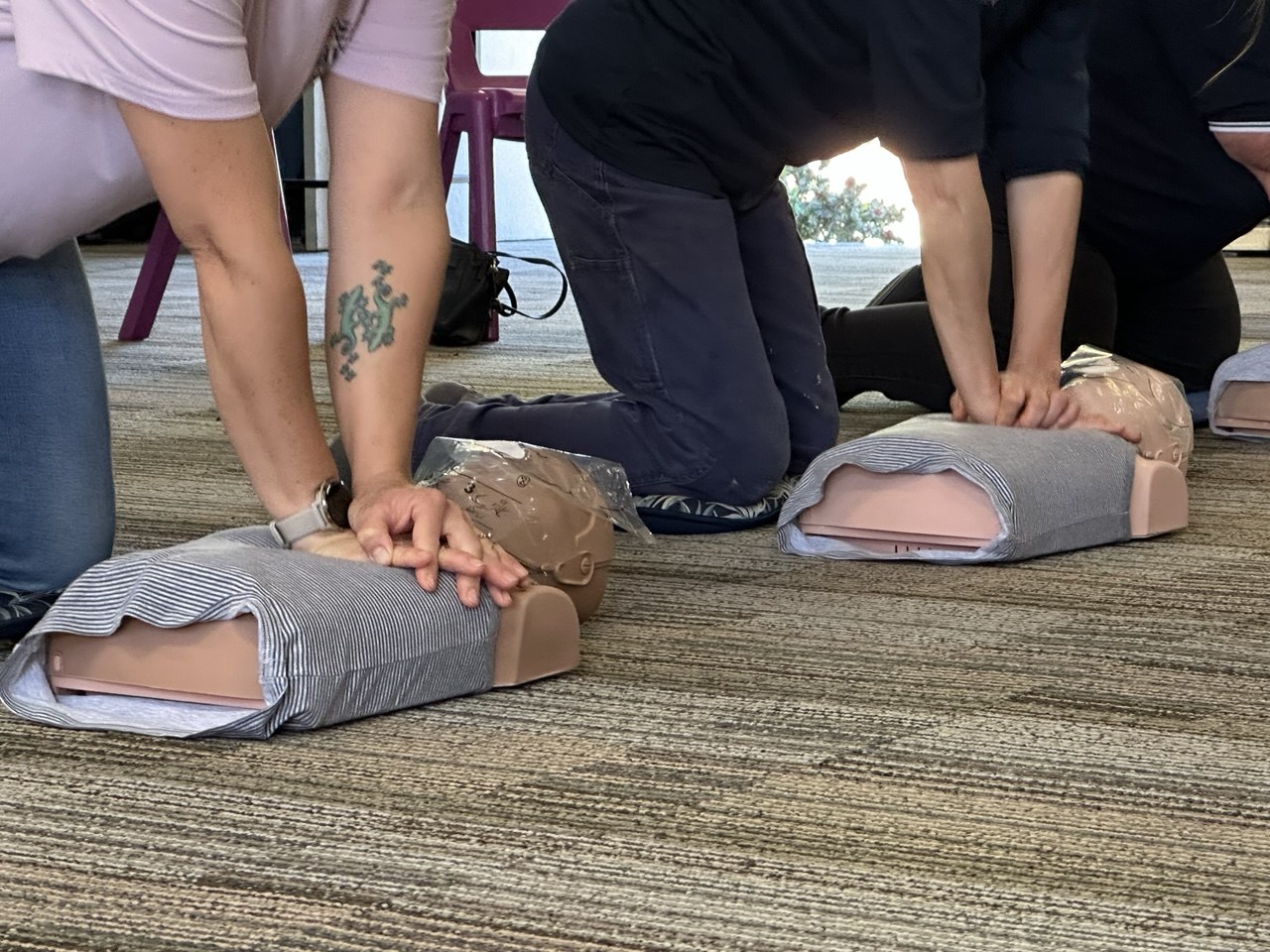
Continue CPR until the AED is turned on and the pads are attached. Then follow the AED’s voice prompts — the device will guide you through each step.
CPR and AED use are covered as part of our nationally recognised CPR training Perth.
How to Apply AED Pads
To apply the pads, expose the person’s bare chest.
Place one pad just below the collarbone on the right side of the chest. Place the other pad on the left side, below the armpit. Each pad has a diagram showing the correct placement.
The pads need firm contact with dry skin. If the chest is wet, quickly dry it.
If there is excessive chest hair, you may need to shave or trim the area — some AEDs include a razor or scissors. Speed is important, so do not spend a lot of time preparing the area perfectly. Minimise any delay.
Follow the diagrams on the pads. The idea is that the shock travels through the heart between the two pads.
What If the Person Has a Pacemaker or Medication Patch?
If the person has an implantable medical device such as a pacemaker — you may feel a small firm lump under the skin, usually on the upper left chest — place the pad a few centimetres from the device.
If there is a medication patch on the chest, wear gloves to remove it, wipe the area, and then apply the pad.
Follow the AED Prompts
The AED will analyse the heart rhythm and determine whether a shock is advised.
If a shock is advised, the AED will instruct you to ensure no one is touching the person, then press the shock button.
After the shock — or if no shock is advised — immediately resume CPR. Continue to follow the AED prompts.
AEDs are extremely safe. Do not touch the person while the shock is being delivered.
How to Use an AED on Children and Infants
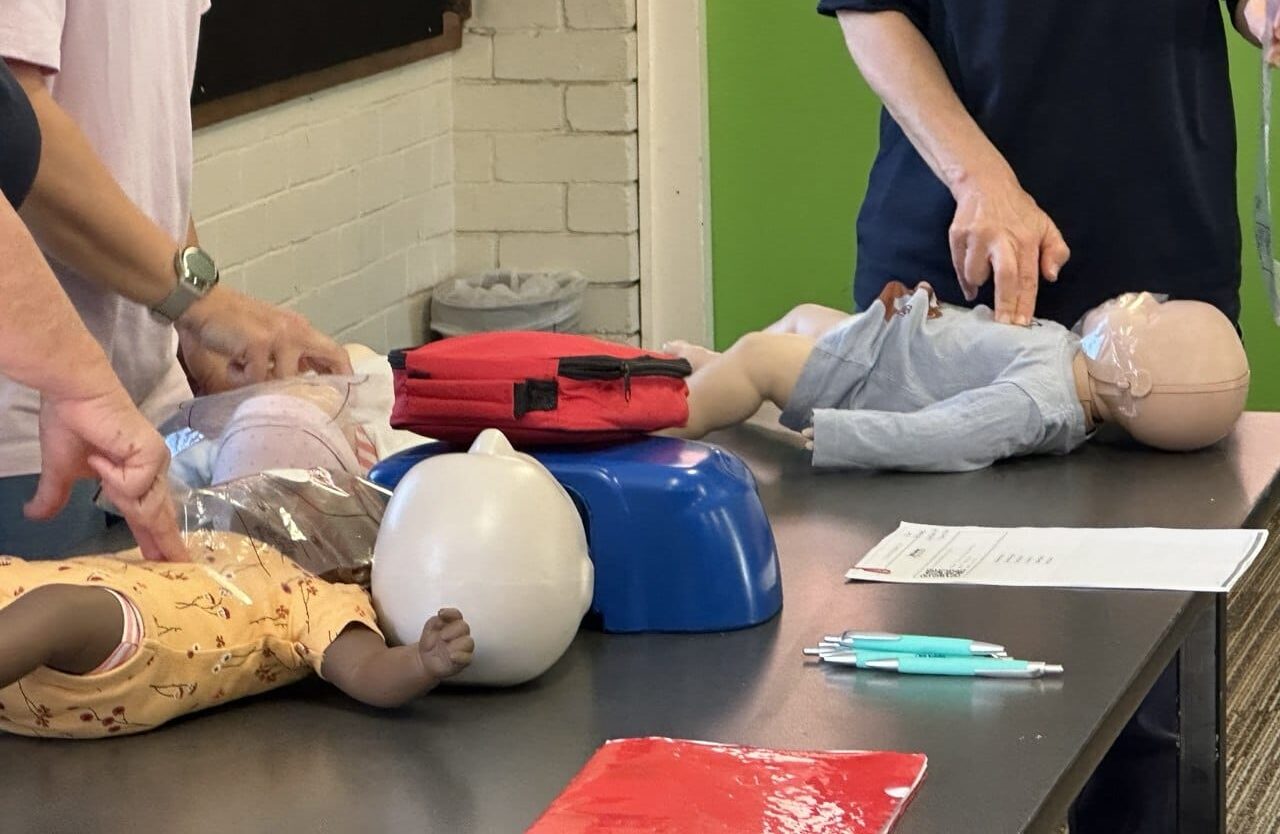
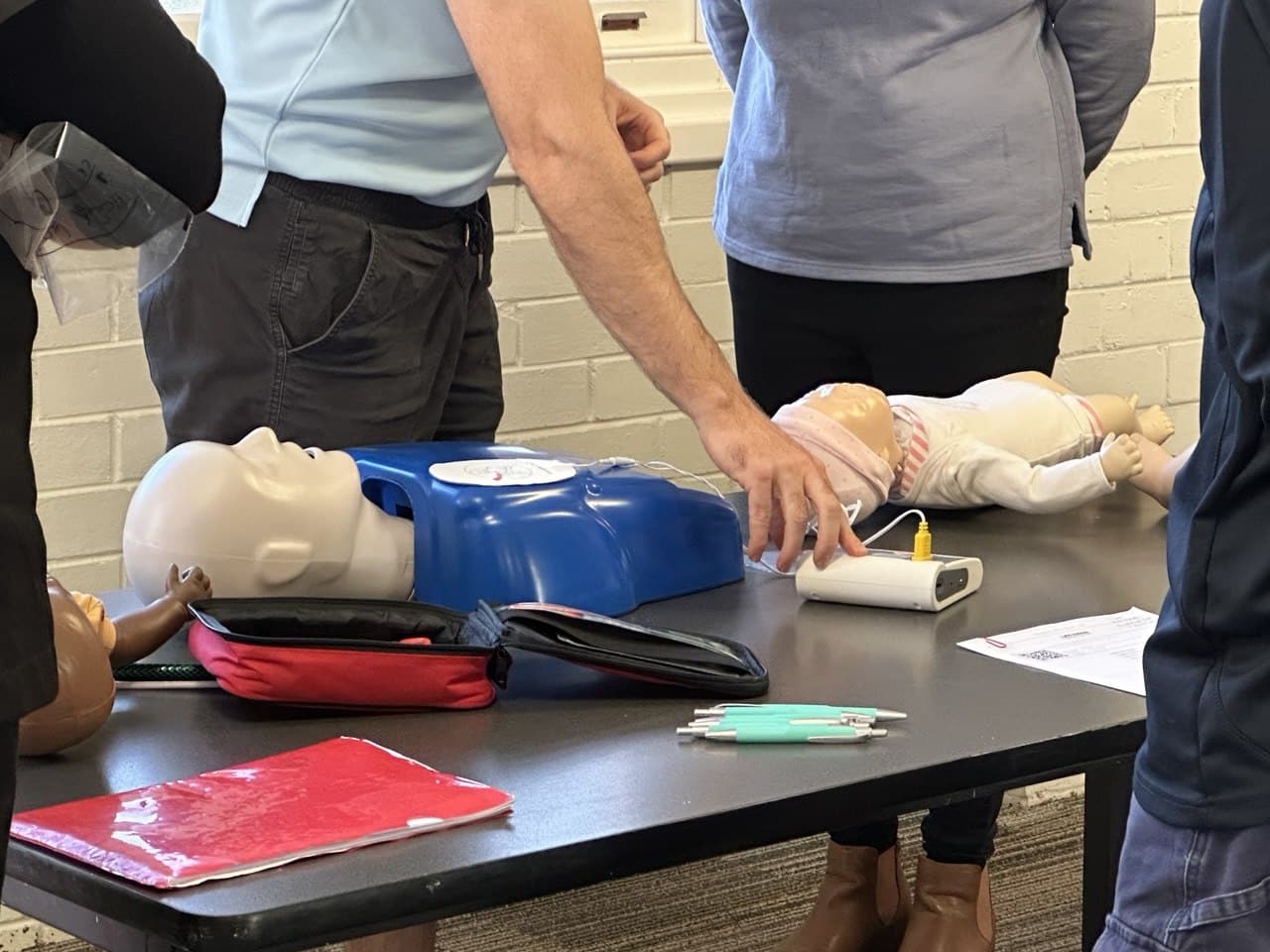
For smaller children or infants — such as those where adult pads look too large for the chest — paediatric pads and an AED with paediatric capability are preferred if available.
If not, use standard adult pads: it’s better than no AED at all. Ensure the pads do not touch.
If the pads are too large and risk touching on the front of the chest, use front-and-back placement: one pad on the upper back between the shoulder blades, the other on the front of the chest.